


Will Trump Attack Iran After the Midterm Elections? | Three Iranian Perspectives on the Possibility of Renewed War
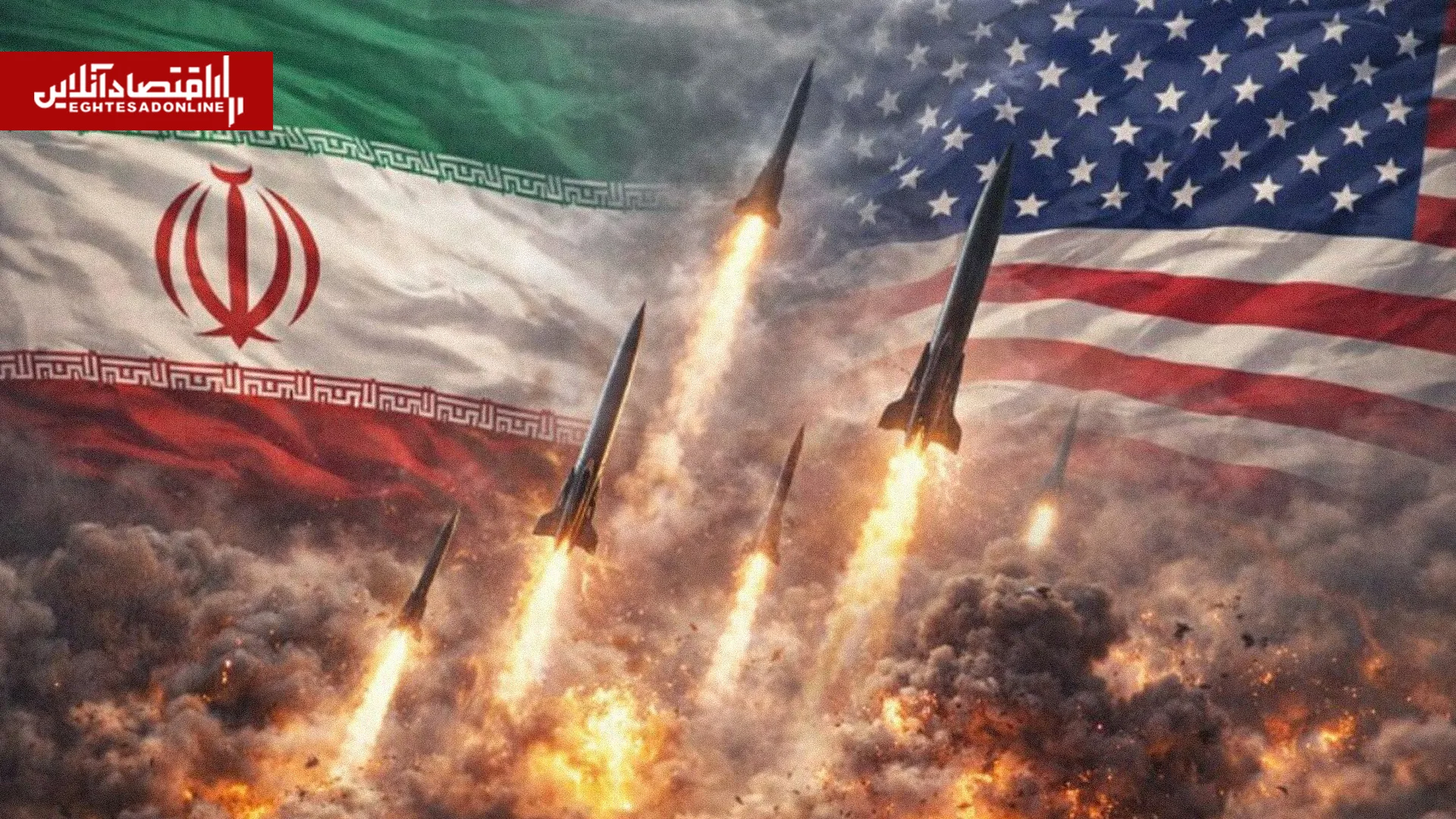
EghtesadOnline: The possibility of renewed military strikes, the deadlock in nuclear negotiations, and Donald Trump's calculations following the U.S. midterm elections have become central themes in the analyses of three Iranian figures featured in international media.
Political Desk: Disagreements between Tehran and Washington over Iran's nuclear program, sanctions, and the possibility of a renewed military confrontation remain major concerns for international analysts. Against this backdrop, three Iranian figures specializing in foreign policy and international relations have offered different perspectives on the future of the confrontation in interviews with foreign media outlets.
Could the Conflict Escalate Before or Immediately After the Elections?
Ali Vaez, Director of the Iran Project at the International Crisis Group and an expert on Iran's nuclear negotiations, discussed the deadlock in the Iran-U.S. conflict and the possibility of a new round of confrontation in an interview with the American magazine Foreign Affairs, published on October 15, 2026.
Vaez argues that, despite the economic and military costs, maintaining the current stalemate is less costly for both Tehran and Washington than reaching an agreement that would require difficult concessions from both sides.
To explain this situation, he points to diplomatic efforts on the sidelines of the United Nations General Assembly, where Iranian Foreign Minister Abbas Araghchi held talks with Steve Witkoff and Jared Kushner about returning to a previous memorandum of understanding.
According to Vaez, Iran had proposed reopening the Strait of Hormuz within seven days rather than 30. In return, the United States would have to end its naval blockade, ease some economic pressure, and commit to ending the war.
Washington, however, wanted nuclear concessions to be included in the agreement, a demand Tehran viewed as effectively acknowledging the success of U.S. economic pressure.
Could Another Attack Come Before or After the U.S. Midterm Elections?
One of the most significant parts of Vaez's remarks concerns the connection between military developments and the U.S. elections.
He outlines two possible scenarios. First, Iran could take an escalatory step ahead of the midterm elections in an attempt to break the U.S. blockade and economic pressure. Second, Donald Trump could see an opportunity to further weaken Iran through military action after the elections, when the political outcome is known and the electoral costs of such a move are lower.
Vaez said:
"We could see another round of confrontation, either as an October surprise that Iran creates on the eve of the midterm elections, or after the elections, when Trump has little to lose."
He views this possibility as part of a recurring cycle of confrontation between the two countries, in which temporary agreements give way to renewed periods of tension without resolving the underlying disputes.
Why Is Pushing the United States Out of the Middle East So Difficult?
In another part of the interview, Vaez addressed whether Iran could force Washington to withdraw from the region by increasing the costs of its military presence.
He expressed doubts about whether such an objective could be fully achieved, arguing that the withdrawal of U.S. forces from some damaged bases is not the same as eliminating Washington's military capabilities in the region.
According to Vaez, even without a permanent presence at Gulf bases, the United States can still project military power from long distances.
He also argues that Iran's regional network of allies has undergone a shift in priorities following the war. Iran's missiles and drones have taken on a more prominent role in deterrence, while the position of regional groups has also changed in Tehran's strategic calculations.
Tehran May Escalate Tensions to Prevent U.S. Pressure From Becoming Entrenched
Mohammad Ayatollahi-Tabaar, an associate professor of political science at Texas A&M University in the United States, also discussed Iran's wartime strategy and Tehran's efforts to change Washington's security calculations in the Middle East in the same joint interview with Ali Vaez, published in Foreign Affairs on October 15, 2026.
Unlike Vaez, who considers the continuation of the current stalemate tolerable for both sides, Ayatollahi-Tabaar emphasizes that the existing situation may not be sustainable from the perspective of Iranian decision-makers. Tehran, he argues, may therefore move toward increasing pressure and escalating the confrontation in an attempt to change the status quo.
He believes there is a significant gap between Washington's and Tehran's assessments of their respective capabilities and resilience.
According to him, U.S. officials view Iran as a severely weakened country that could collapse under economic pressure and a naval blockade. Tehran, however, believes that despite suffering military and economic damage, it still possesses considerable resources and tools to continue the confrontation.
Ayatollahi-Tabaar said:
"Iran is economically weak because of sanctions and the blockade, and it has suffered serious military damage, but it is a country with considerable capabilities, tools, and resources."
In his view, Washington's perception that Iran is on the verge of collapse could reduce the U.S. government's incentive to reach a lasting agreement. If the administration believes that further pressure will bring about the collapse of its adversary, it has little reason to back down from its demands.
Why Might Tehran Be in a Hurry to Escalate the Conflict?
One of the most important aspects of Ayatollahi-Tabaar's analysis concerns the timing of Iran's potential decisions.
Tehran may believe it has a limited window of opportunity to change the situation. The United States could eventually replenish its ammunition stockpiles, stabilize energy markets, and establish alternative routes for transporting energy around the Strait of Hormuz.
According to him, a future U.S. administration could also adopt a less polarized approach than Trump and build a more effective coalition against Iran.
Ayatollahi-Tabaar said:
"They believe time is limited and that they need to escalate."
He also points to several tools that could feature in Tehran's calculations for raising the costs of the U.S. military presence in the region. These include the use of regional allies, targeting data centers, and even internet cables.
Tehran's Strategic Objective: Raising the Cost of the U.S. Presence in the Region
Ayatollahi-Tabaar believes Tehran's objective is not merely to retaliate against military attacks. Changing Washington's security calculations in the Middle East is also a key priority.
He explains that following U.S. and Israeli military strikes, part of Iran's security thinking has shifted toward the view that the country should no longer rely solely on deterrence through regional allies.
According to him, attacking U.S. military bases and increasing the costs of regional countries' cooperation with Washington have emerged in some Iranian decision-making circles as potentially more effective strategies.
However, Ayatollahi-Tabaar warns that this approach could backfire. Attacks on the infrastructure and military bases of neighboring countries could push them toward closer cooperation with the United States and encourage more direct involvement in the conflict.
War and Sanctions Will Not Stop Iran's Nuclear Program
Seyed Hossein Mousavian, a former Iranian diplomat and nuclear negotiator, Iran's former ambassador to Germany, and a former researcher at Princeton University's Program on Science and Global Security, discussed the possibility of further escalation or a return to negotiations between Iran and the United States on Al Jazeera's English-language program The Bottom Line on October 4, 2026.
Mousavian argues that the confrontation between Iran and the United States is not limited to disagreements over the nuclear program. Oil, regional security, and broader geopolitical objectives also play a role.
Referring to U.S. officials' justification of the war as an effort to prevent Iran from acquiring nuclear weapons, he says Iranian leaders reject this explanation and believe Washington's objectives extend beyond the nuclear issue.
What Does Mousavian Say About the Possibility of Further Escalation?
In the interview, Mousavian argues that military strikes cannot provide a solution to the underlying disputes.
In his view, the history of nuclear negotiations and previous agreements demonstrates that without mutual trust, even political understandings cannot last.
He believes the United States undermined Tehran's confidence in Washington's commitments by withdrawing from the Joint Comprehensive Plan of Action (JCPOA) and abandoning the Islamabad memorandum of understanding.
Mousavian also emphasizes that Iran is seeking an agreement, but an arrangement focused solely on nuclear restrictions cannot resolve the root causes of the two countries' disagreements.
Alan Eyre, a former U.S. diplomat, also presented his views during the program.
Eyre argues that instead of pursuing a long-term diplomatic strategy, the Trump administration is more focused on achieving quick military and political victories. He also warns that the war could strengthen Iran's motivation to pursue nuclear deterrence.
Mousavian: U.S. Strikes Will Not Halt Iran's Nuclear Activities
Mousavian believes military action alone cannot resolve the nuclear dispute.
In his view, Iran remains a member of the Nuclear Non-Proliferation Treaty (NPT), and the nuclear rights of the treaty's member states must be recognized in any potential agreement.
He also says the International Atomic Energy Agency (IAEA) has not presented evidence that Iran's declared nuclear program has been diverted toward the production of nuclear weapons. This statement reflects Mousavian's assessment and should not be interpreted as an independent conclusion by the IAEA.
Mousavian argues that future negotiations should not focus exclusively on nuclear restrictions. He identifies three issues as essential to a lasting agreement:
- Relations between Iran and the United States.
- Security in the Persian Gulf and the Strait of Hormuz.
- Reducing mutual regional threats.
According to him, the Islamabad memorandum of understanding could serve as a basis for returning to direct negotiations.
He further argues that maintaining a large U.S. military presence in the Persian Gulf cannot be economically and strategically sustainable over the long term.
Mousavian proposes that the Gulf states establish a joint security framework and take responsibility for maritime security and freedom of navigation.
He ultimately emphasizes:
"Neither war nor sanctions can resolve this crisis."